A great live screen printing station is planned around the guest path, not the press. Decide how people enter, choose their art, watch the print, and grab a finished piece — then build the footprint, the menu, and the crew to keep that line moving.
The most common mistake event producers make with live printing is treating it like a piece of equipment to drop in a corner. The press is the easy part. What separates a station that draws a crowd from one that stalls into a frustrated queue is the planning around it: the artwork prepared in advance, the substrate menu kept tight, the staffing matched to your guest count, and a pickup flow that gets warm shirts into hands without a bottleneck. This guide walks through each decision in the order you should make it.
Merch Troop runs these stations as a Southern California live-event crew, serving Orange County, Los Angeles, San Diego, Las Vegas, and nationwide programs with enough lead time. Here is how we plan them.
Think of this guide as the order of operations. Each decision narrows the next: the guest path determines the footprint, the footprint and guest count determine staffing, the product and artwork determine production speed, and the venue determines load-in and power. Make these choices in sequence and the whole station snaps into focus. Skip ahead — booking a press before you have mapped the line — and you end up retrofitting flow around equipment, which is exactly how a station ends up feeling slow even when the press is running perfectly.
Start with the guest path
Before you think about ink, map how a guest moves through the experience. A well-designed station has four clear zones, and the line feels fast when each one is obvious and unblocked.
- Entry and art menu — where guests arrive and pick their design from a small, clear menu.
- Sizing and staging — where they choose a garment size and the crew loads the platen.
- Production — the visible press, flash, and cure, positioned so the crowd can watch the pull.
- Pickup — a labeled handoff table separate from the queue, so finished pieces never clog the line.
The single biggest driver of perceived speed is keeping the pickup zone separate from the production zone. When guests wait for a cure in the same spot new guests are trying to enter, the whole station feels slow even if the press is flying.
Keep the substrate menu tight
Shirts, totes, posters, hoodies, and event-staff gear can all work, but a live event should focus on one or two substrates that print cleanly and quickly. A focused menu is faster to produce, easier for guests to choose, and far less likely to run into sizing or color shortages.
- T-shirts — the crowd favorite; cotton and cotton blends take ink well and cure fast.
- Tote bags — low cost, universally kept, and very fast to print.
- Posters or art prints — a premium, gallery-style takeaway for brand activations.
Give artwork time before load-in
Screen prep, ink mixing, PMS color matching, and a drying-flow plan should all happen during pre-production — never on event day. Each ink color needs its own burned screen, so finalize art early and keep it bold and low-color. A confident one- or two-color design burns fast, prints fast, and reads strong across a busy room; an eight-color illustration will slow the line and frustrate the queue.
Match staffing to guest count
Operators are what keep quality and pace high while a crowd watches. A single operator can run a station, but as guest count and dwell time rise, a second operator and a runner managing the art menu and pickup keep the line from backing up. We size the crew to your expected guests, event hours, and how interactive you want the experience to feel. Staffing is one of the largest line items on any live-print quote precisely because it is what makes the station feel fast.
Confirm power, space, and load-in
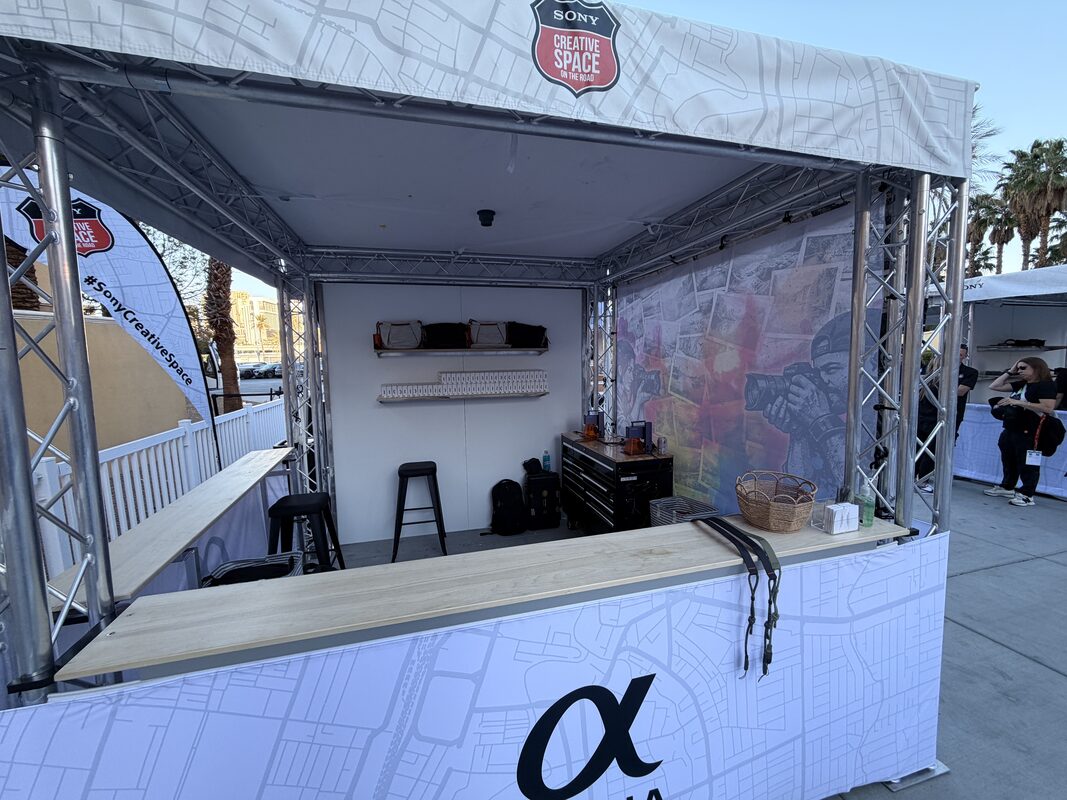
Flash-cure and conveyor equipment draw real power, so a live station needs dedicated circuits or a confirmed power drop — not a single shared outlet. Most setups fit a 10x10 or 10x20 footprint, plus room for a queue and a pickup table that does not block venue traffic. Confirm load-in and load-out windows, freight access, and any venue restrictions early. We handle these conversations during planning so there are no surprises on event day, including teardown so the booth clears on schedule.
Build the pickup flow
The finish is where good stations win or lose. Finished pieces need rack space, full cure, and a clear, labeled handoff so nobody walks off with wet ink or grabs the wrong size. A simple ticket or name-card system lets guests roam the event and return for a finished shirt, which keeps your queue short and the experience relaxed instead of rushed.
Planning FAQ
How far in advance should we book a live print station?
The sooner the better, especially for nationwide programs that involve travel. Local Southern California events need less lead time, but earlier booking gives us room to prep artwork, mix and match colors, source blanks in the right sizes, and confirm venue power and load-in.
How much space does a live screen printing booth need?
Most stations fit a 10x10 or 10x20 footprint for the press, flash, and cure, plus additional room for a guest queue and a separate pickup table. We confirm the exact footprint against your floor plan during planning.
Can the station be branded to our event?
Yes. We PMS-match ink to your brand, build a custom art menu, and the visible press itself becomes a branded centerpiece. Bold, low-color logos and slogans reproduce best in a live setting.